Decentralization : Future Beyond Web2
 May 9, 2026
 May 9, 2026
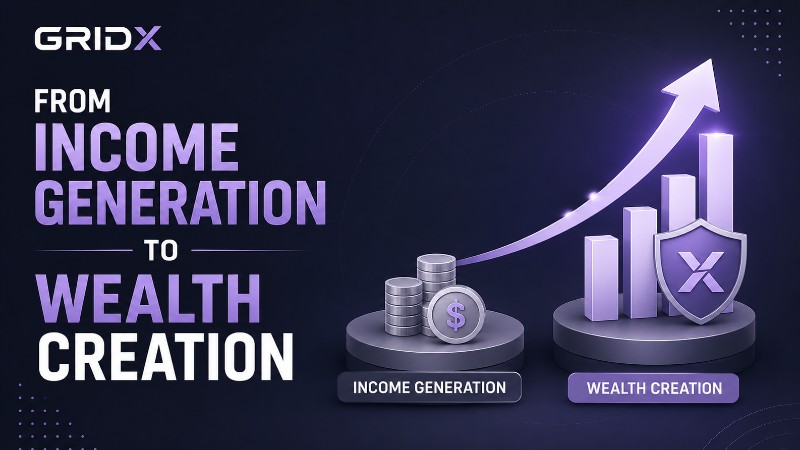
From school to higher education, most systems are designed with a clear outcome:prepare individuals to earn an income.A System That Teaches Survival, Not Designing WealthThe students were trained to:S...
From school to higher education, most systems are designed with a clear outcome:
prepare individuals to earn an income.
The students were trained to:
Study hard
Get qualified
Secure a job or profession
Earn consistently
While this path is important, it addresses only one part of the financial journey—income generation.
What is rarely taught is the next step:
how to convert income into long-term wealth.
The gap is not in knowledge—it is in application and structure.
Most people know how to earn.
Very few are taught:
How to manage income effectively
How to allocate capital strategically
How to build assets instead of liabilities
How to create systems that generate income beyond personal effort
As a result, many individuals remain in a continuous cycle:
Earn → Spend → Repeat
Without a structured approach, income alone does not lead to financial progress.
Active effort
Time-dependent - “8 Hours Trap”
Short-term sustainability
Stops when effort stops
System-driven
Asset-based
Long-term growth
Continues beyond active involvement
The transition from income to wealth requires intentional design, not just effort.
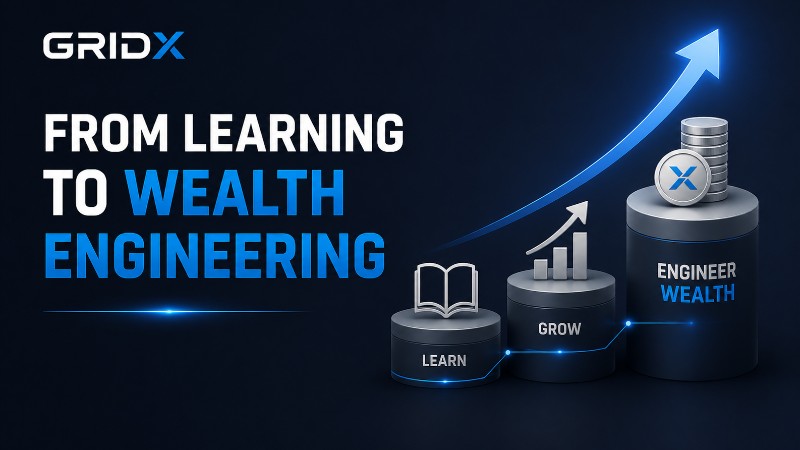
Beyond income and wealth lies an even deeper concept:
This is the process of:
Structuring income streams
Leveraging systems and technology
Building scalable models
Creating repeatable growth mechanisms
It transforms financial growth from uncertain effort into designed outcomes.
Even with increasing income levels, many individuals do not progress financially because:
There is no structured financial plan
Income is not converted into assets
Decisions are emotional rather than systematic
Opportunities are approached randomly instead of strategically
Without a framework, growth remains inconsistent.
Today, technology and digital platforms are creating new possibilities.
Well-designed ecosystems can:
Introduce structured participation
Align incentives with activity
Enable access to tools and systems
Support scalable growth
These ecosystems shift individuals from working for income to participating in systems that build wealth.
A Shift in Perspective
The future of financial growth lies in moving from:
Individual effort → System-based execution
Short-term income → Long-term value creation
Random participation → Structured ecosystems
This shift is not automatic—it must be understood and adopted consciously.
Earning is a skill.
Managing is a discipline.
But building wealth is a system.
Education has done well in teaching how to earn.
The next step is to learn how to design financial growth.
The difference between those who work for income and those who build wealth
is not effort—it is structure, system and strategy.
 May 9, 2026
 May 9, 2026
 May 9, 2026
 May 9, 2026
 May 9, 2026